The soils under Manchester’s city centre differ sharply from those in the suburbs. In Salford Quays, you find soft alluvial clays and peat laid down by the River Irwell, while around Didsbury you hit dense glacial till left by retreating ice sheets. That contrast makes the field density test (sand cone method) essential for every earthworks project. Whether you are compacting backfill behind a retaining wall or building a new road base on former industrial land near the Bridgewater Canal, you need to know the in-situ dry density. Sand cone testing gives you that number quickly, on the spot, without waiting for lab results. It is the standard compaction control across Greater Manchester, and it works on gravels, sands, silts, and clays alike. Without it, you risk building on loose ground that will settle unevenly under load.
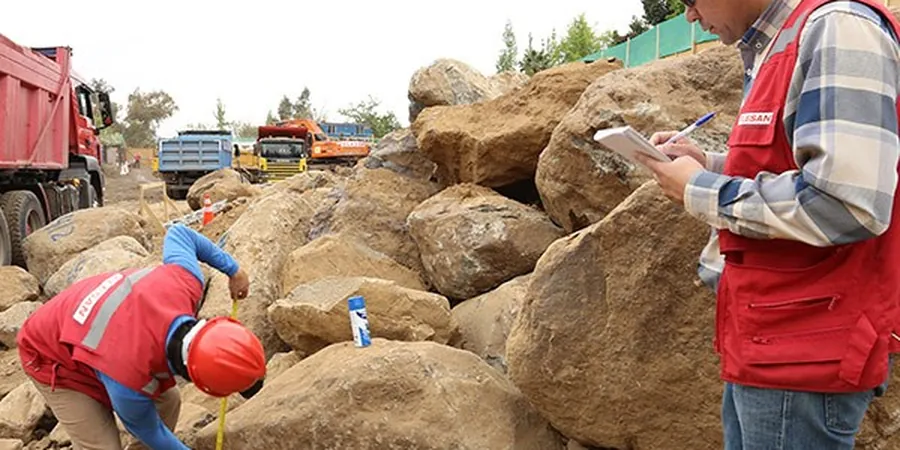
Sand cone testing gives you dry density in the field within hours, not days — essential compaction control for Manchester’s variable glacial and alluvial soils.
Scope of work in Manchester
Critical ground factors in Manchester
The sand cone apparatus itself is simple: a metal cone with a valve, a jar of calibrated sand, and a flat base plate. But in Manchester’s rainy climate, the biggest risk is moisture. If the sand absorbs humidity overnight, its density changes and your volume calculation drifts. We store sand in sealed containers and re-calibrate every morning. Another risk: loose topsoil or debris on the test surface. We always clean and level the area before seating the plate. On steep embankments along the M60 or the A56, we use a longer cone to avoid sand spillage. Missing a density target here means future pavement failure or slope creep, so we re-test any lift below 95 percent of maximum dry density.
This service complements our laboratory testing work for a complete project analysis.
Our services
We offer three core field density test activities tailored to Manchester’s construction sites:
Standard Sand Cone Test (100 mm)
For fine-grained fills, subgrades, and trench backfills. Ideal for housing developments and road subgrades across Trafford and Stockport. Quick turnaround, same-day results.
Coarse-Grained Sand Cone Test (150 mm)
For granular fills, gravels, and crushed stone. Used on large infrastructure projects like the A6 bypass or airport aprons. Larger hole gives better representation of coarse material.
Compaction Certification Reports
Formal documentation of all density test results, including moisture content and compaction ratio. Accepted by BCOs, NHBC, and local authorities across Greater Manchester.
Quick answers
How does the sand cone method compare to a nuclear density gauge?
The sand cone test is slower but does not require radioactive source licensing. It is the preferred method on UK sites where nuclear gauges face restrictions. Accuracy is comparable when performed correctly.
How much does a field density test (sand cone method) cost in Manchester?
A standard sand cone test typically costs between £70 and £110 per test point. The exact price depends on site access, number of tests, and whether reporting is included. Bulk discounts apply for multiple test points on the same visit.
What happens if the compaction result is below 95%?
The layer must be re-compacted and re-tested. We will mark the failing area, advise on moisture adjustment or additional rolling passes, and schedule a follow-up test at no extra charge for the re-test point.
Can you test on wet soil or after rain?
Yes, but the sand must be dry and the test surface cleared of surface water. If the fill is saturated above optimum moisture, compaction will not achieve target density. We recommend waiting until the layer drains or adding dry material.
Do you provide same-day results for urgent sites?
We can deliver preliminary density results within 2 hours of testing. The full certified report, including moisture content, is issued within 24 hours. We regularly work on time-sensitive projects in Manchester, including road closures and night works.