A common mistake we see on Manchester road projects is assuming the glacial till that underlies most of the city provides a uniform, high-strength subgrade. In reality, the till varies dramatically — from stiff, low-permeability clay to pockets of sand and gravel — and is often overlain by made ground from the city's industrial past. Without a site-specific subgrade design that accounts for these lateral changes, contractors risk differential settlement, pumping failures, and premature pavement cracking. A proper investigation starts with test pits and laboratory classification, then moves to targeted in-situ tests such as the plate load test to measure stiffness directly under simulated traffic loads.
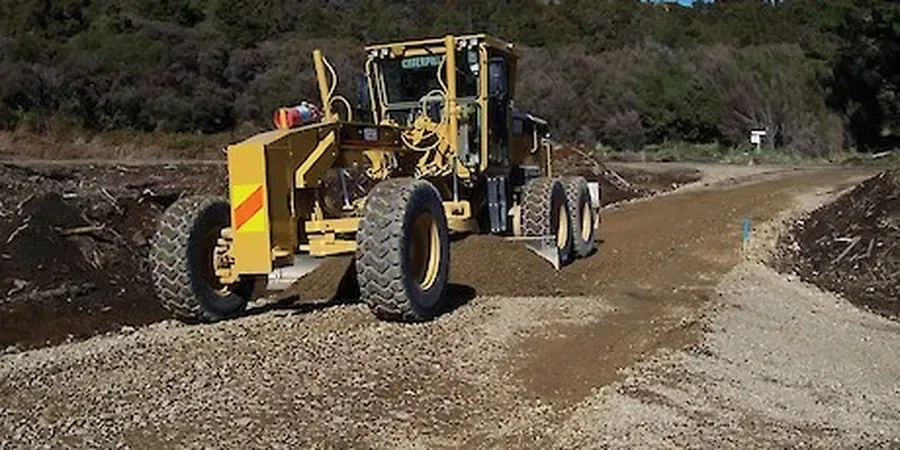
In Manchester, the real subgrade risk is not low strength — it is the sudden lateral change from stiff till to soft fill that goes undetected.
Scope of work in Manchester
- Natural moisture content and Atterberg limits (BS 1377-2)
- In-situ dry density via sand replacement (BS 1377-9)
- Soaked CBR at 4-day soak (BS 1377-4)
- California Bearing Ratio correlation with DCP (dynamic cone penetrometer)
Critical ground factors in Manchester
In Manchester we often see site investigations that stop at the first metre of stiff till and assume the subgrade is adequate for a 20 MPa design modulus. The real risk lies in the made ground — variable thickness, often containing demolition rubble, ash, and organic matter — that can sit directly beneath the capping layer. If the subgrade design does not explicitly map the depth and extent of these soft inclusions, the pavement will knowledge localised failures within the first three years. A targeted programme of trial pits and DCP traverses across the full road width is the only reliable way to detect these zones before construction begins.
This service complements our laboratory testing work for a complete project analysis.
Our services
We deliver the full spectrum of subgrade investigation and design activities tailored to Manchester's ground conditions.
Subgrade Investigation & CBR Assessment
Trial pits, DCP traverses, and laboratory CBR (soaked and unsoaked) to characterise subgrade strength at multiple depths. We offer design CBR values with statistical confidence limits for each pavement layer.
Compaction Control & Capping Layer Design
In-situ density testing (sand replacement, nuclear gauge), Proctor compaction curves, and specification of capping layer thickness based on subgrade modulus. We certify compliance with SHW Series 600 requirements.
Quick answers
What is the typical CBR value for Manchester's glacial till subgrade?
In its natural state, the stiff till typically gives soaked CBR values between 2 % and 7 %, depending on moisture content and plasticity. Made ground and soft zones can drop below 2 %, which requires a capping layer or Improvement.
How does high rainfall in Manchester affect subgrade design?
With over 800 mm of annual rainfall, the natural moisture content of the till often sits near the plastic limit. This means soaked CBR testing (4-day soak per BS 1377-4) is essential — dry CBR values can overestimate strength by a factor of two or more.
What is the cost range for a subgrade investigation in Manchester?
For a typical residential road scheme, the investigation cost ranges between £890 and £2,760, depending on the number of trial pits, DCP tests, and laboratory CBR samples. Larger highway projects with multiple test locations fall at the upper end of this range.
When should I use DCP testing instead of CBR sampling?
DCP (dynamic cone penetrometer) is ideal for rapid profiling across a wide area — we run it every 10–20 m along the road alignment to detect soft spots. It correlates well with CBR but cannot replace laboratory CBR for design. A combined approach gives the best value.