In Manchester, the combination of glacial till overlying Coal Measures strata creates a layered ground profile that can shift over time. Many local engineers have seen how a cut slope in the Medlock Valley or an embankment along the M60 can develop tension cracks without obvious warning. Monthly geotechnical slope monitoring provides the repeated survey data needed to detect movement rates as low as 2 mm per month. By combining surface prisms with subsurface inclinometers, we track both visible and deep-seated creep. This service is particularly relevant where recent residential development pushes into former mining areas or steep valley sides. Before setting up a monitoring array, it pays to run a resistivity survey to map potential slip surfaces in the till, which helps optimise sensor placement.
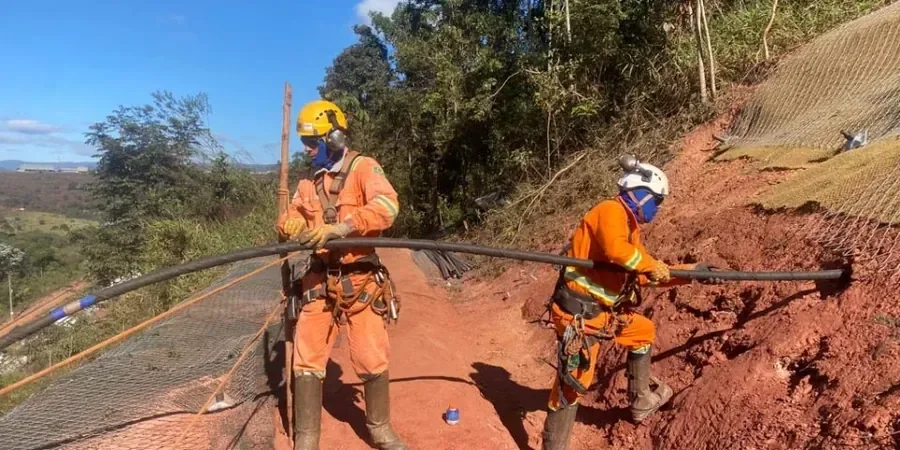
Detecting 2 mm of monthly creep in Manchester's glacial till can prevent a slope failure that would otherwise close a road or delay a housing scheme by months.
Scope of work in Manchester
Critical ground factors in Manchester
A common mistake among contractors in Manchester is assuming that a stable cut slope during dry summer months remains safe after heavy autumn rainfall. Without monthly geotechnical slope monitoring, a gradual 3 mm creep in the till can accelerate into a full rotational slip once pore pressures rise. Another oversight is failing to re-zero inclinometer casings after nearby piling works — the vibration shifts the baseline. We have seen cases where ignored readings led to a retaining wall leaning 80 mm out of plumb over two years, requiring emergency grouting. Regular monthly checks catch these trends early and keep the project on schedule.
This service complements our laboratory testing work for a complete project analysis.
Our services
Our monthly geotechnical slope monitoring in Manchester covers the full chain from installation to interpretation. Each component is tailored to the site's geology and risk profile.
Inclinometer casing installation and baseline survey
Borehole drilling through till and weathered Coal Measures, grouting of inclinometer casing, and an initial zero-read survey to establish the reference profile. All work follows BS 5930 procedures.
Vibrating-wire piezometer monitoring
Installation of multiple piezometers at key depth intervals, connected to automatic dataloggers. Pore pressure trends are plotted monthly and compared against rainfall data from the Manchester Weather Centre.
Surface prism and levelling network
Permanent survey targets installed on the slope face and crest, read monthly with a total station. Vertical and horizontal displacements are resolved to ±1 mm accuracy.
Monthly data review and alert service
All field readings are compiled into a concise report with movement vectors, pore pressure graphs, and a comparison against the agreed trigger levels. Amber or red alerts are issued within 24 hours of detection.
Quick answers
How does monthly slope monitoring differ from a one-off stability assessment?
A one-off assessment gives a snapshot of the factor of safety at a single point in time. Monthly monitoring provides a trend — showing whether the slope is accelerating, stable, or responding to seasonal moisture changes. In Manchester's glacial till, pore pressure lags rainfall by several weeks, so repeated readings are essential to catch the peak risk window.
What is the typical cost range for monthly geotechnical slope monitoring in Manchester?
For a standard setup with one inclinometer, three piezometers, and a surface prism network, the monthly service ranges between £300 and £1,050 depending on site access, number of sensors, and reporting frequency. This covers installation amortisation, field visits, data reduction, and the alert system.
Can monitoring be carried out on active construction sites with heavy plant moving nearby?
Yes, but the sensor locations must be protected with bollards or raised covers to prevent accidental damage. We also coordinate with the site manager to avoid survey disruptions. Inclinomenter casings near piling zones are fitted with tamper-proof caps, and the baseline is rechecked after any nearby vibration event.