Manchester's rapid expansion during the Industrial Revolution created a patchwork of brownfield sites, canal basins, and reclaimed marshland across the city. From the clay-rich glacial till beneath the city centre to the alluvial deposits along the River Irwell, the subsurface conditions here demand careful material selection. That's where proper geotextile specification becomes critical — not just picking a fabric weight, but matching the mechanical and hydraulic properties to the actual ground conditions. We've worked on projects from Ancoats to Salford Quays, and we consistently recommend combining your geotextile design with a permeability test to confirm drainage behaviour before installation.
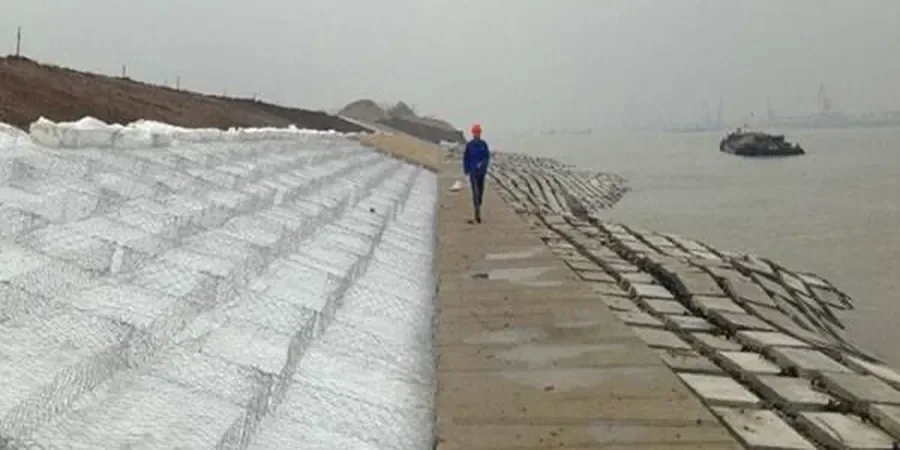
Getting the geotextile specification right in Manchester means matching tensile strength and hydraulic conductivity to the actual ground conditions, not just the product brochure.
Scope of work in Manchester
Critical ground factors in Manchester
Manchester's wet climate — averaging over 800 mm of rainfall per year — means that geotextiles installed in drainage or filtration applications must be carefully specified to avoid clogging. The city's legacy of coal mining and heavy industry also introduces contamination risks: acidic groundwater or hydrocarbon residues can degrade certain polymer types over time. We've seen cases where a standard polypropylene geotextile failed within 18 months because the specification didn't account for site-specific chemical exposure from old coke works. That's why we always recommend a full chemical compatibility review as part of your geotextile specification in Manchester.
This service complements our laboratory testing work for a complete project analysis.
Our services
We offer two core activities to support your project, from design stage through to installation verification.
Geotextile Selection & Design
We review ground investigation data, drainage requirements, and loading conditions to specify the correct geotextile class. This covers separation, filtration, and stabilisation functions for Manchester's mixed ground conditions.
Installation Quality Control & Testing
On-site verification of geotextile placement, seam strength testing, and compliance checks against the specification. We also coordinate any required independent testing to confirm the delivered product matches the design values.
Quick answers
What is the typical cost for a geotextile specification review in Manchester?
For a standard site with one or two geotextile functions (e.g. separation plus filtration), expect costs between £310 and £1,040. This covers document review, parameter selection, and a written specification. Larger projects with multiple zones or unusual chemical exposure may be higher.
Which geotextile class is most common for road sub-base stabilisation in Manchester?
Class 2 or Class 3 geotextiles per MCHW Series 600 are typical for road sub-base stabilisation in Manchester. The choice depends on the subgrade CBR value and the thickness of the granular layer. We usually recommend a Class 3 woven geotextile when the subgrade CBR falls below 3%.
How do I know if a non-woven or woven geotextile is right for my site?
Non-woven geotextiles suit filtration and drainage applications because of their higher permittivity and elongation. Woven geotextiles offer higher tensile strength at low strain, making them better for stabilisation and separation under heavy loads. The decision depends on whether your primary need is drainage or reinforcement.
What chemical resistance testing is needed for brownfield sites in Manchester?
For brownfield sites, we recommend testing the groundwater and soil for pH, hydrocarbons, and heavy metals. A geotextile specification should then reference the polymer's resistance to those specific chemicals. Polypropylene is generally resistant to most organic compounds, but polyester can degrade in high-pH environments.