Manchester's geology is shaped by its glacial history. The city sits on a mix of glacial till, alluvial deposits from the River Irwell, and soft clays in areas like Salford Quays. These materials vary widely in bearing capacity and drainage. A proper soil classification via USCS or AASHTO is essential before any foundation design. We assess grain size, plasticity, and organic content to classify your soil correctly. This step prevents costly surprises during excavation. Our lab follows BS 5930 and BS EN ISO 14688-2 for consistent results. Before placing a slab, we often recommend a permeability test to confirm drainage assumptions. And for cohesive soils, a consolidation test clarifies long-term settlement behavior.
Old mill foundations and filled waterways make soil classification in Manchester a critical first step before any foundation design or road construction.
Scope of work in Manchester
Critical ground factors in Manchester
Compare the red sandstone bedrock under the city centre with the soft alluvial clays in Trafford Park. One provides excellent bearing capacity; the other can settle unevenly for years. Misclassifying these materials leads to foundation failure or overdesign. In Chorlton and Didsbury, glacial till with cobbles requires careful sampling to get a representative classification. Ignoring the difference between a low-plasticity silt (ML) and a high-plasticity clay (CH) could double your foundation costs. Our classification report flags these risks early, so your structural engineer designs for the real ground conditions, not a generic assumption.
This service complements our laboratory testing work for a complete project analysis.
Our services
We offer a full suite of soil classification activities tailored to Manchester's varied ground conditions. Each test is performed in our UKAS-accredited laboratory by qualified technicians.
Visual-Manual Soil Description
Field and lab description per BS 5930. We record colour, structure, consistency, and inclusions to assign an initial soil type.
Grain Size Distribution Analysis
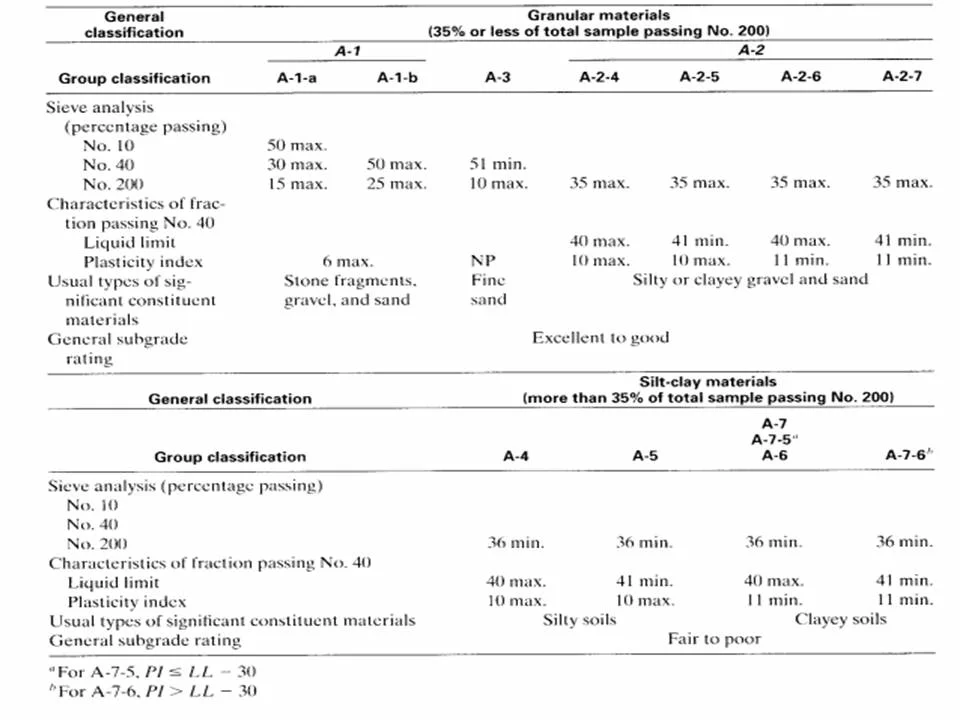
Sieve and hydrometer analysis to determine percentage of gravel, sand, silt, and clay. Essential for USCS and AASHTO group assignment.
Atterberg Limits Testing
Liquid limit, plastic limit, and plasticity index measured per BS 1377-2. Critical for classifying fine-grained soils.
Organic Content Determination
Loss on ignition test to identify problematic organic soils. High organics indicate need for removal or stabilization before construction.
Quick answers
Why is USCS classification better than AASHTO for foundation design in Manchester?
USCS focuses on grain size and plasticity, which directly relate to bearing capacity and settlement. AASHTO is designed for pavement subgrades. So for foundations, USCS gives your structural engineer more relevant data on soil behavior under load.
How long does a full soil classification report take?
Typically 5 to 7 working days from sample receipt. If you need faster turnaround, let us know at booking. We coordinate with project schedules in Manchester regularly.
What samples do you need for classification testing?
Disturbed bulk samples (about 5 kg for granular soils, 2 kg for clays) are sufficient for sieve analysis and Atterberg limits. If you also need compaction or strength tests, we recommend undisturbed block samples.
How much does soil classification cost in Manchester?
Our standard classification suite (visual description, sieve analysis, Atterberg limits, USCS/AASHTO assignment) ranges from £40 to £70 per sample. Additional tests like organic content or hydrometer carry extra charges. Contact us for a firm quote based on your project volume.