The difference between building on the firm glacial till of the Cheetham Hill ridge and the soft alluvial deposits along the Irwell valley in Manchester is night and day. Where deeper soft clays and peats dominate, conventional shallow foundations rarely work. That is where deep soil mixing design becomes essential, creating stiff columns of treated ground that transfer loads to competent strata. In our knowledge, a well-executed DSM scheme can cut foundation costs by 30% compared to driven piles, particularly on brownfield sites around Salford Quays. Before finalising the treatment grid, we always check for buried obstructions with georradar GPR to avoid surprises during auger penetration.
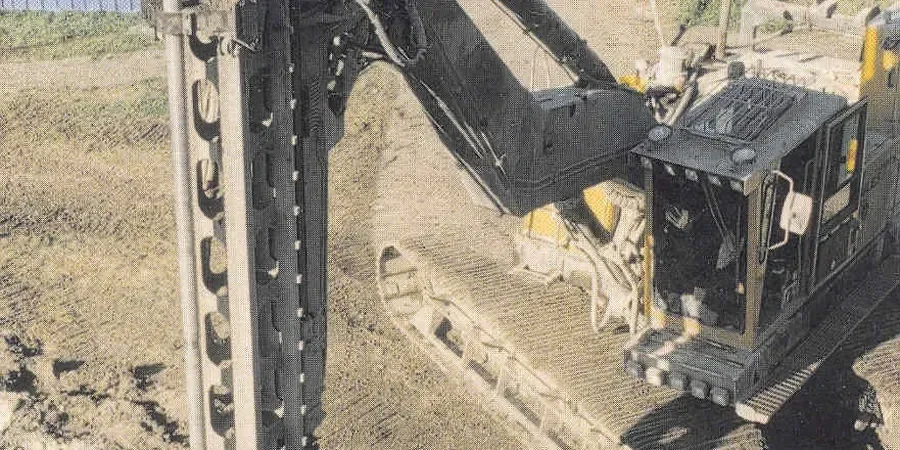
A well-executed DSM scheme can cut foundation costs by 30% compared to driven piles on Manchester brownfield sites.
Scope of work in Manchester
Critical ground factors in Manchester
Eurocode 7 (EN 1997-1:2004) and BS 5930 are the governing standards for deep soil mixing design in Manchester. Section 6 of EC7 demands that the characteristic strength of treated ground be verified through field trials and core testing — a requirement we take seriously given the city's legacy of deep peat and soft clay layers. The main risk is heterogeneity: old river channels filled with variable organic material can produce columns with erratic strength. To mitigate that, we run a dedicated ensayo triaxial on wet and dry samples from every tenth column. This ensures the design's partial factors are met across the entire site, not just on the test panel.
This service complements our laboratory testing work for a complete project analysis.
Our services
We offer three complementary activities to support deep soil mixing design in Manchester, from initial characterisation through to validation testing.
Field Trial Design & Supervision
We plan and supervise small-scale DSM trial panels on your site, typically 6 to 12 columns, to determine the optimal binder type, dosage, and mixing energy. The trial includes core sampling at 7, 14, and 28 days and unconfined compression testing to calibrate production parameters.
Laboratory Mix Design
Using representative soil samples from the site, we prepare laboratory-mixed DSM specimens at different binder contents and water ratios. Tests include unconfined compressive strength, permeability, and wet-dry durability, all under ISO 17025 accreditation.
Verification & Quality Control
After full-scale production, we perform core drilling and SPT through the treated columns, measure column diameter via inclinometer surveys, and run load tests to confirm the design's bearing capacity and stiffness. A detailed verification report is issued for the engineer of record.
Quick answers
What typical depths can DSM columns reach in Manchester soils?
In Manchester, DSM columns can be executed from 5 m to 25 m depth. The practical limit depends on the rig's torque capacity and the presence of dense glacial till layers below the soft alluvium. For most brownfield sites along the Irwell valley, 15 m to 18 m is a common target depth.
How is the binder dosage determined for a deep soil mixing design?
The binder dosage is determined through a laboratory mix design phase. We take representative soil samples from the site and prepare DSM specimens with binder contents ranging from 150 to 350 kg/m³. Unconfined compression tests at 28 days tell us the optimum dosage for the target strength, typically between 1.5 and 8 MPa.
What does deep soil mixing design cost in Manchester?
The cost of deep soil mixing design in Manchester typically ranges from £1,270 to £5,590, depending on the number of trial columns, laboratory testing, and site complexity. This includes field trial supervision, mix design, and verification testing. For a precise quote, please contact us with your site details.
Can DSM be used on contaminated brownfield sites in Manchester?
Yes, DSM is particularly effective on brownfield sites. The cement-based binder can immobilise many common contaminants found in Manchester's industrial legacy, such as heavy metals and hydrocarbons. We always verify compatibility with a site-specific leachate test before full production. The treated columns also act as vertical barriers when overlapped, reducing lateral contaminant migration.