When we show up on a Manchester site, the first thing we unpack is the oedometer frame and the filter-paper suction kit. That rig tells us how much the clay is going to move when the seasons change. Manchester sits on a thick blanket of glacial till and alluvial clays, and those soils can swell up to 8% in wet winters then crack open in dry spells. Our team cuts undisturbed block samples straight from the test pit, wraps them in wax, and gets them back to the lab within the day. We combine the oedometer readings with plasticity index classification to rank the heave potential before a single foundation is poured. That way the structural engineer knows exactly how much void to leave under the ground beam.
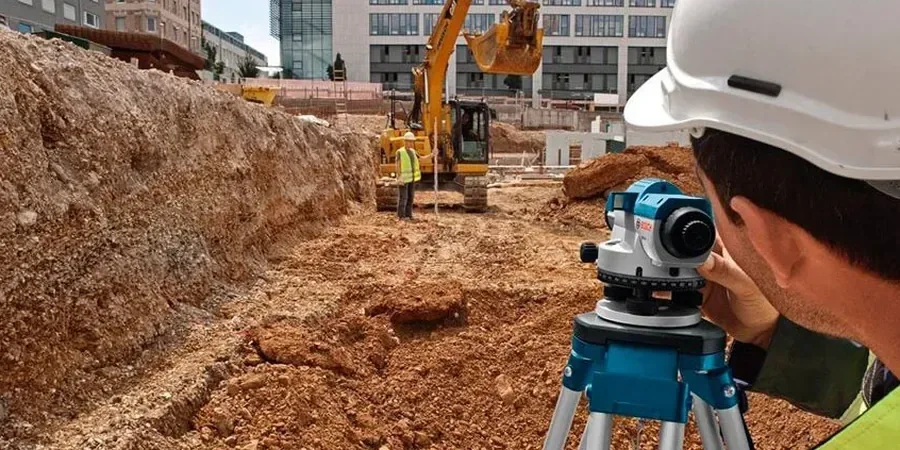
Manchester clays can swell up to 8% in wet cycles — without oedometer data the foundation design is a gamble.
Scope of work in Manchester
Critical ground factors in Manchester
The mistake we see most often in Manchester is the builder treating the top metre of clay as non-expansive because the site looks dry in August. That same ground, wetted up by October, can lift a ground-bearing slab by 40 mm. We had a call from a housing developer in Didsbury who poured a raft slab on a clay that tested at PI 48 — they skipped the swell test. Within two winters the slab had hogged 35 mm and the internal partitions cracked. An expansive soil evaluation before the foundation design would have flagged the need for a suspended slab with a void former. The cost of the lab work is trivial compared to the repair bill for differential heave.
This service complements our laboratory testing work for a complete project analysis.
Our services
We offer two specific activities tailored to Manchester's clay geology. Both are UKAS-accredited under ISO 17025 and include full chain-of-custody documentation.
Oedometer Swell & Collapse Testing
One-dimensional consolidation with free swell and constant-volume swelling pressure. We test undisturbed samples trimmed from block or thin-walled tubes. Results are plotted as e vs log p, with the collapse index (Cv) reported separately for sites that might see wetting under load.
Expansive Soil Classification Suite
Liquid limit, plastic limit, linear shrinkage, and free swell index. We run the methylene blue value test for clay activity when the PI is borderline. The suite includes a preliminary heave prediction using the Van der Merwe method modified for UK glacial clays.
Quick answers
What is the difference between free swell and swelling pressure?
Free swell measures the vertical strain of a laterally confined sample when inundated under a small seating load (usually 1 kPa). Swelling pressure measures the stress required to keep the sample at constant volume during wetting. In Manchester clays free swell can reach 8% while swelling pressure typically ranges from 35 to 120 kPa.
How long does an expansive soil evaluation take in Manchester?
The classification suite (Atterberg, shrinkage, free swell) takes 5 to 7 working days. Full oedometer swell and collapse testing with suction takes 10 to 14 working days because each load stage needs 24 hours of equilibrium. We can prioritise if the project has a tight programme.
Why is expansive soil evaluation especially important in Manchester?
Manchester has a variable drift geology of glacial till, alluvial clays and lacustrine deposits. The clay fraction is often high enough to cause differential heave under residential and commercial slabs. The UK climate — wet winters followed by dry summers — drives cyclic moisture changes that make shrink-swell behaviour the leading cause of low-rise foundation damage in the region.
How much does an expansive soil evaluation cost in Manchester?
A basic classification suite (Atterberg, shrinkage, free swell) ranges from £550 to £950. A full evaluation including oedometer swell, swelling pressure and filter-paper suction runs between £1,050 and £1,410. The price depends on the number of samples and whether undisturbed block sampling is required.