Manchester sits on a mix of thick glacial till, river terrace deposits and some peat pockets, which makes ground permeability vary drastically within a few hundred metres. We run field permeability tests (Lefranc / Lugeon) across the city to give developers and engineers a clear picture of how water moves through the subsoil. The constant rain here — around 800 mm annually — means drainage and groundwater control are never an afterthought. Before any basement excavation or foundation design, knowing the actual hydraulic conductivity of the ground helps avoid costly surprises. Our team has tested in sites from Salford Quays to the foothills of the Pennines, so we know exactly which method suits each geology. When the project calls for deeper investigation, we often combine this test with a dilatometer to capture both flow and stiffness in one campaign.
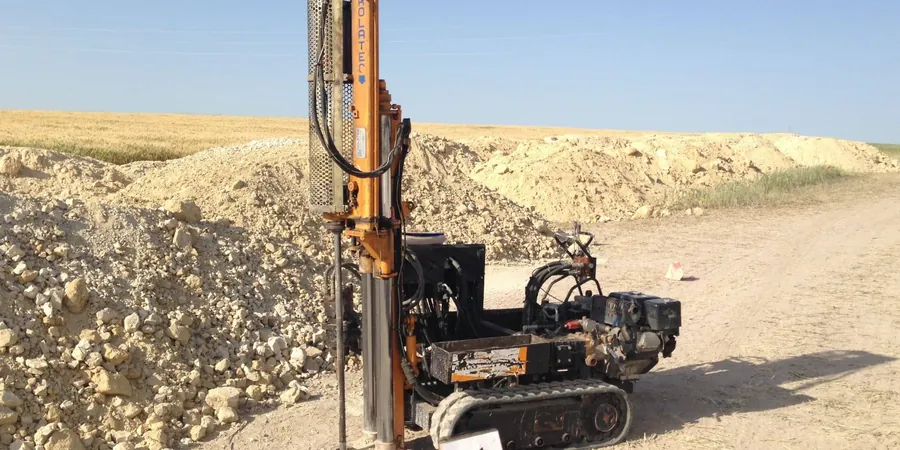
Knowing the actual hydraulic conductivity of the ground before digging saves weeks of dewatering delays and avoids foundation redesign on the go.
Scope of work in Manchester
Critical ground factors in Manchester
Manchester expanded fast during the Industrial Revolution, with mills and warehouses built right over soft alluvial soils and made ground. Many of those old foundations now sit on land that was never properly characterised. If you dig a new basement or install deep drainage near these structures, a sudden change in permeability can trigger settlement or washing out of fines. We have seen cases where a Lugeon test revealed open fissures in the underlying sandstone that no borehole log had picked up. That kind of information changes the whole dewatering strategy. A field permeability test (Lefranc/Lugeon) in Manchester is not just a box-ticking exercise — it is a real safeguard against ground collapse and long-term water ingress.
This service complements our laboratory testing work for a complete project analysis.
Our services
We offer two main field permeability test setups in Manchester, each tailored to the local ground conditions and project stage.
Lefranc Permeability Test
Constant-head or falling-head test performed in a single borehole with a screened section. Ideal for gravels, sands and glacial tills where the water table is shallow. We use a mechanical packer to isolate the test zone and measure flow under a steady head until equilibrium. Typical duration is 2 to 4 hours per test level.
Lugeon Water Pressure Test
Multi-stage packer test designed for rock masses and stiff clays. We apply increasing pressure steps (usually 3 to 5 stages) and record the flow rate at each step. The result tells you whether the rock behaves as a laminar, turbulent or dilatant medium. Essential before grouting programmes or deep excavation in Manchester's sandstone layers.
Quick answers
How long does a field permeability test (Lefranc / Lugeon) take in Manchester?
A single Lefranc test at one depth usually takes 2 to 4 hours, including setup and stabilisation. A full Lugeon test with 5 pressure steps can take 4 to 6 hours per borehole section. If you need multiple test levels, plan for one full day per hole.
What is the difference between a Lefranc test and a Lugeon test?
The Lefranc test is used in soils and soft ground — it measures permeability under a constant or falling head in a screened or open borehole. The Lugeon test is designed for rock masses; it applies controlled water pressure through a packer system and evaluates the rock's response under multiple pressure cycles.
How much does a field permeability test cost in Manchester?
The typical range for a field permeability test (Lefranc or Lugeon) in Manchester is between £540 and £760 per test level, depending on access, depth and the number of pressure stages. For a full campaign with multiple test points we can offer a package rate. Contact us for a site-specific quote.