Manchester’s expansion from a 19th-century industrial hub to a modern metropolitan centre has placed significant demands on its transport infrastructure. The city’s underlying geology, dominated by glacial till overlying sandstone and mudstone of the Carboniferous Coal Measures, creates variable subgrade conditions that directly influence flexible pavement design. Our team in Manchester approaches each pavement project by first characterising the subgrade through In-Situ, often complementing this with a plate load test to verify bearing capacity at formation level. We then correlate these results with laboratory CBR determinations to establish the design thickness for bituminous and granular layers. The presence of soft alluvial deposits along the River Irwell and the Mersey Valley requires particular attention, as these zones can exhibit low California Bearing Ratios that drive deeper pavement sections or the need for stabilisation. Our methodology follows the guidance in Design Manual for Roads and Bridges (DMRB) and local highway authority specifications.
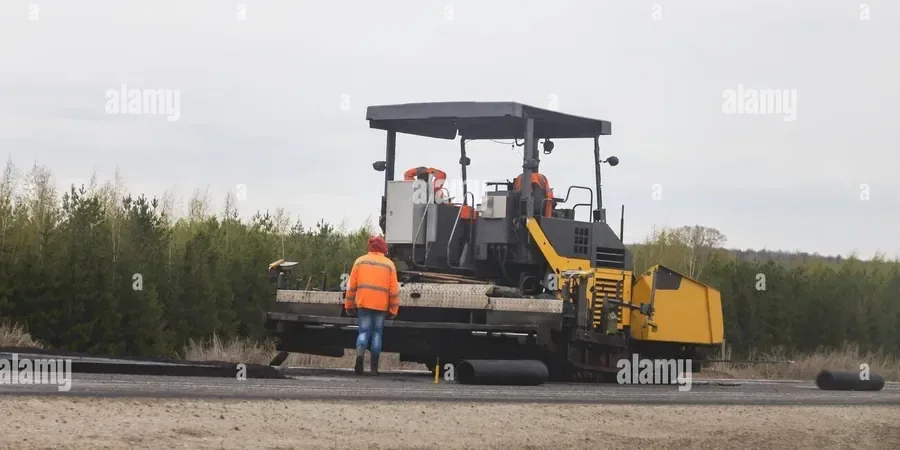
For Manchester’s glacial till subgrades, soaked CBR values typically range from 2% to 5%, dictating pavement thicknesses between 350 and 500 mm of granular base and binder.
Scope of work in Manchester
Critical ground factors in Manchester
Manchester lies within a low-seismicity region, so seismic loads are rarely a governing factor in pavement design. However, the principal geotechnical risk comes from high groundwater levels in the alluvial valleys and from the variable thickness of the superficial deposits. Shallow water tables can reduce subgrade strength significantly, especially during wet winter months when construction is most active. Another risk arises from the presence of legacy mine workings beneath parts of east Manchester and Salford, where old coal mine shafts and shallow workings can cause localised settlement that cracks the pavement surface. Our laboratory tests identify these risks by measuring the collapse potential on re-compacted samples and by checking for sulphate attack on cementitious stabilisation. We also assess the frost susceptibility of the subgrade by plotting the particle size curve against the UK Transport Research Laboratory criteria.
This service complements our laboratory testing work for a complete project analysis.
Our services
Our laboratory in Manchester provides the full suite of geotechnical tests required for flexible pavement design, from basic classification through to advanced repeated load testing.
CBR Testing for Pavement Design
We perform both laboratory and field California Bearing Ratio tests on subgrade soils and granular materials. The soaked CBR test at 4 days of soaking is our standard method, following BS 1377-4. Results are reported at the target dry density and moisture content for direct use in DMRB CD 225 thickness design curves.
Compaction Control (Proctor & Field Density)
We determine the maximum dry density and optimum moisture content using the modified Proctor test (BS 1377-4:1990). Field density checks using sand replacement or nuclear gauge confirm that the placed material meets the specified 95% or 97% of maximum dry density. We also carry out the moisture condition value (MCV) test for rapid site control.
Repeated Load Triaxial Test for Resilient Modulus
For detailed pavement design or when working with unbound granular materials, we run the repeated load triaxial test to measure the resilient modulus (Mr) and permanent deformation characteristics. This test follows the protocol from the Nottingham Transportation Engineering Centre and is essential for mechanistic-empirical pavement design approaches.
Quick answers
What is the typical CBR value for subgrade soils in Manchester?
For the glacial till (boulder clay) that underlies most of Manchester, soaked CBR values typically range from 2% to 5%. Softer alluvial deposits along the river valleys can give values below 2%, while well-drained granular fills may exceed 8%. Our laboratory determines the soaked CBR at the target density and moisture content to match the design compaction condition.
How does the presence of mine workings affect flexible pavement design in Manchester?
Shallow coal mine workings below parts of east Manchester and Salford can cause localised differential settlement that cracks the pavement. Our investigation includes trial pits to locate any voids and laboratory collapse potential tests on the fill material. If collapse potential exceeds 1%, we recommend either deep compaction, grouting of voids, or a reinforced pavement design with a geogrid layer at the subgrade interface.
What is the typical cost range for a full flexible pavement design package in Manchester?
For a standard road section including subgrade testing, CBR, Proctor, and classification tests, the package typically falls between £1.530 and £3.630. The final cost depends on the number of test locations, the complexity of the subgrade, and whether additional tests such as repeated load triaxial or sulphate analysis are required. We offer a fixed quotation after reviewing the project scope.
Do you follow DMRB CD 225 for pavement design thickness calculations?
Yes, we use the design curves and traffic loading categories from DMRB CD 225 (formerly HD 26/06) for all UK highway projects. Our laboratory results are reported directly in the format required by the pavement designer, including soaked CBR at the design moisture condition and the subgrade modulus for use in the analytical design method. For non-standard materials we also supply the resilient modulus from repeated load triaxial testing.