Ground improvement in Manchester is a critical discipline within geotechnical engineering, addressing the city's legacy of weak, compressible, and variable ground conditions. As the city undergoes extensive regeneration—from the £1bn Mayfield development to the expansion of MediaCityUK—the need to enhance foundation soils without deep excavation or piling has never been greater. This category encompasses a suite of techniques designed to increase bearing capacity, reduce settlement, control groundwater, and mitigate liquefaction risk. By modifying the physical properties of the ground, engineers can unlock brownfield sites, accelerate construction programmes, and deliver safe, durable infrastructure. A well-designed ground improvement strategy often proves essential for meeting both structural demands and regulatory requirements, making it a cornerstone of modern construction in the region.
Manchester's subsurface is dominated by Quaternary glacial deposits, including cohesive glacial till overlying Permo-Triassic sandstones and mudstones of the Sherwood Sandstone Group and the Manchester Marls. However, much of the city centre and the Irwell Valley corridor is underlain by alluvial sands, silts, and peats, often interbedded with layers of made ground from the industrial era. These recent deposits can exhibit high compressibility, low shear strength, and erratic thicknesses, leading to differential settlement and poor drainage. In areas such as Salford Quays, deep deposits of soft estuarine clays and silts present significant challenges for heavy structures. Understanding this complex geology is the first step in selecting an appropriate improvement method, whether it targets shallow granular fills or deeper cohesive layers.
The regulatory framework governing ground improvement in the UK is anchored by Eurocode 7 (BS EN 1997) and its UK National Annex, which mandate a limit state design philosophy for geotechnical works. BS 8004:2015 provides specific guidance on ground treatment, while the ICE Specification for Ground Treatment outlines best practice for execution and quality control. All improvement designs must comply with the Construction (Design and Management) Regulations 2015, placing a clear duty on designers to eliminate or reduce risks. For contaminated land—a common scenario on Manchester's former industrial plots—the Environmental Protection Act 1990 and associated guidance from the Environment Agency apply. Local planning authorities, including Manchester City Council, often require detailed ground investigation reports and method statements that demonstrate compliance with these standards before granting approval.
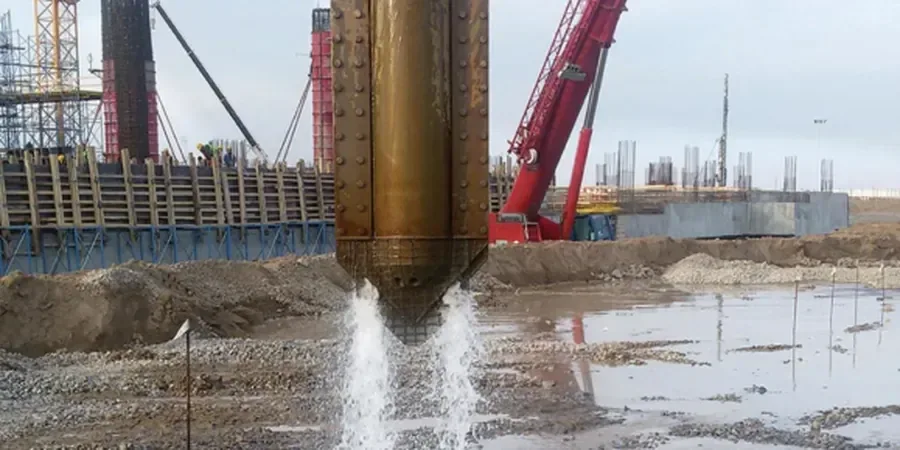
Ground improvement techniques are deployed across a diverse range of projects in the Manchester area. Deep basement excavations for commercial towers in the city centre frequently require groundwater control and soil strengthening, often achieved through jet grouting design to create cut-off walls or underpinning elements. Large-scale residential schemes, such as those along the East Manchester regeneration corridor, benefit from dynamic compaction design to densify loose granular fills and reduce long-term settlement. Infrastructure projects, including new tram extensions and flood defence works, rely on geotextile specification for separation and filtration, while geomembrane specification is critical for lining canals and attenuation ponds. On complex sites with deep compressible layers, deep soil mixing provides a robust solution by creating soil-cement columns that transfer loads to firmer strata. Each service within this category addresses a distinct set of geotechnical risks, and their successful integration demands a thorough understanding of site-specific conditions and performance criteria.
Available services
Deep Soil Mixing (DSM) design
→ Ver detalleDynamic compaction design
→ Ver detalleGeogrid specification
→ Ver detalleGeomembrane specification
→ Ver detalleGeotechnical instrumentation (design and installation)
→ Ver detalleGeotextile specification
→ Ver detalleGrouting design
→ Ver detalleJet grouting design
→ Ver detalleLime and cement stabilization
→ Ver detallePrefabricated vertical drain (PVD) design
→ Ver detallePreloading design (without surcharge)
→ Ver detallePreloading with surcharge design
→ Ver detalleStone column design
→ Ver detalleUnsaturated soil analysis
→ Ver detalleVibrocompaction design
→ Ver detalleQuick answers
What are the main benefits of ground improvement over traditional deep foundations in Manchester?
Ground improvement often reduces costs and programme duration by treating the soil in situ, avoiding the need for extensive piling or excavation and disposal of poor material. It can also reduce concrete and steel consumption, lower carbon emissions, and allow construction on sites with limited headroom. In Manchester's variable ground, methods like dynamic compaction or grouting can quickly densify fills, enabling shallow footing design and accelerating site readiness.
How do Manchester's ground conditions influence the choice of improvement technique?
The presence of soft alluvial clays, peats, and industrial made ground across the Irwell corridor demands techniques that address both settlement and bearing capacity. Granular soils respond well to dynamic compaction, whereas cohesive soils may require deep soil mixing or jet grouting. A thorough ground investigation, compliant with BS 5930, is essential to map the depth and variability of these deposits and to select a technically appropriate method.
What regulatory approvals are needed for ground improvement works in Manchester?
Approvals are typically secured through the local planning authority, with building control checking structural adequacy and the Environment Agency consulted where groundwater is affected. Designs must comply with Eurocode 7 and BS 8004, and a robust quality control plan is expected. For contaminated land, a remediation strategy may need approval under the Environmental Protection Act, often requiring verification testing after treatment.
How is the performance of ground improvement verified on a Manchester construction site?
Verification relies on a combination of pre- and post-treatment in-situ testing, such as cone penetration tests, pressuremeter tests, and plate load tests, alongside laboratory analysis of samples. Continuous monitoring during installation, using instrumentation like inclinometers and piezometers, confirms design assumptions. The ICE Specification for Ground Treatment provides detailed acceptance criteria, ensuring the improved ground meets the required strength and stiffness parameters.