Laboratory testing forms the analytical backbone of every successful ground engineering project in Manchester, providing the quantitative data needed to transform site investigation findings into safe, cost-effective designs. This category encompasses the full spectrum of soil and rock testing procedures performed under controlled conditions to determine physical, mechanical, and chemical properties. From basic index tests that classify materials to advanced strength and consolidation assessments, Manchester's laboratories deliver the reliable parameters that geotechnical engineers depend on for foundation design, earthworks specification, and contamination assessment. The city's position at the forefront of UK construction and infrastructure renewal means that rigorous laboratory programmes are not merely advisable but essential for managing risk on sites ranging from city-centre tower blocks to brownfield regeneration schemes.
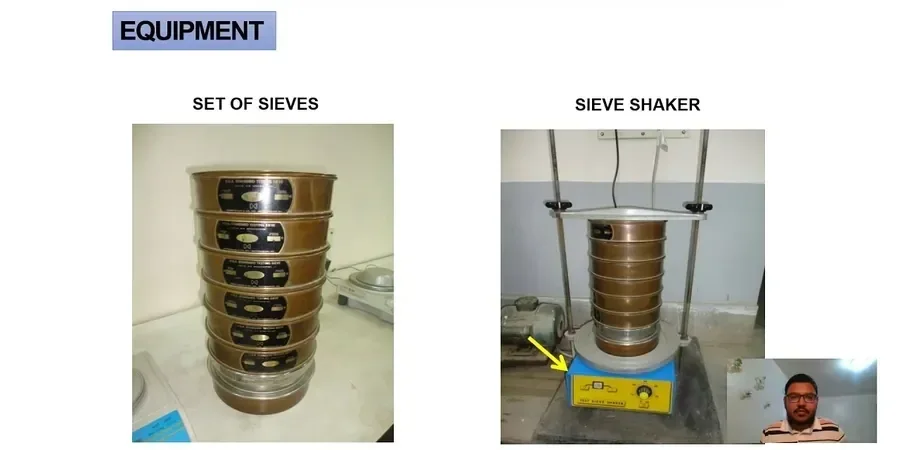
Understanding Manchester's geological context is fundamental to appreciating why certain laboratory tests assume greater importance here. Much of the city centre and southern suburbs are underlain by glacial till and fluvioglacial deposits of the Quaternary period, overlying the Permo-Triassic Chester Formation sandstones and the Manchester Marls. These superficial deposits exhibit considerable variability, with lenses of soft clay, pockets of sand, and occasional peat horizons reflecting the area's complex post-glacial history. The till itself is typically a stiff, overconsolidated clay with abundant clasts, but its behaviour can vary dramatically depending on moisture content and particle size distribution. This inherent heterogeneity demands comprehensive laboratory characterisation, as assumptions based on nearby borehole data alone can prove dangerously misleading. A thorough grain size analysis (sieve and hydrometer) programme is often the first step in unravelling this complexity, revealing the proportions of gravel, sand, silt, and clay that govern drainage, strength, and volume change potential.
All laboratory testing undertaken for construction projects in Manchester must comply with the relevant British and European standards, which are referenced in UK legislation and contractual specifications. BS 1377 remains the cornerstone document for soils testing, divided into nine parts covering everything from moisture content determination to triaxial strength tests, while BS EN ISO 17892 has progressively harmonised many procedures with European norms. The UK National Annex to Eurocode 7 (BS EN 1997-2) explicitly requires that laboratory testing be planned and supervised by qualified geotechnical specialists, with results interpreted in the context of ground investigation objectives. For earthworks, the Specification for Highway Works (SHW) Series 600 dictates the Proctor test (Standard or Modified) methodology and acceptance criteria for compaction control. Environmental testing may additionally require adherence to MCERTS standards where chemical analysis is performed on contaminated soils, a common requirement given Manchester's extensive industrial legacy.
The types of projects that demand comprehensive laboratory testing in Manchester are as diverse as the city's built environment. High-rise developments in the city centre, such as those transforming the Deansgate and Greengate areas, require detailed oedometer consolidation tests to predict settlements under heavy foundation loads, particularly where deep basements are proposed in overconsolidated tills. Infrastructure schemes, including Metrolink extensions and highway improvements, rely heavily on soil classification (USCS/AASHTO) and strength testing to verify the suitability of locally won fill materials and to design stable cuttings and embankments. Brownfield regeneration, a defining feature of Manchester's planning landscape, invariably triggers the need for contamination suites alongside geotechnical testing, as former industrial sites in areas like Ancoats and Salford Quays must be demonstrated safe for sensitive end uses. Even smaller-scale residential developments on infill sites benefit from targeted laboratory programmes that identify potential issues such as shrinkable clays or sulphate attack on buried concrete before they escalate into costly failures.
Available services
Direct shear test
→ Ver detalleGrain size analysis (sieve + hydrometer)
→ Ver detalleLaboratory permeability test (falling/constant head)
→ Ver detalleOedometer consolidation test
→ Ver detalleProctor test (Standard or Modified)
→ Ver detalleResidual soil characterization
→ Ver detalleSoil classification (USCS/AASHTO)
→ Ver detalleSoil mechanics study
→ Ver detalleTriaxial test
→ Ver detalleQuick answers
What laboratory tests are typically required for a ground investigation in Manchester?
The scope depends on the ground conditions and proposed structure, but a typical programme includes moisture content, Atterberg limits, particle size distribution, and soil classification as a minimum. For foundation design, shear strength tests (triaxial or direct shear) and oedometer consolidation tests are commonly specified. Chemical testing for pH, sulphates, and contaminants is essential on brownfield sites given Manchester's industrial history.
How do British Standards affect laboratory testing procedures?
British Standards, particularly BS 1377 and BS EN ISO 17892, prescribe the equipment, methodology, and reporting requirements for virtually all geotechnical laboratory tests. Compliance is mandatory under Eurocode 7 and is typically written into specifications and contracts. Laboratories must demonstrate competence through UKAS accreditation to ISO/IEC 17025, ensuring traceability and repeatability of results for Manchester projects.
Why is soil classification important for Manchester's glacial till sites?
Manchester's glacial till is inherently variable, with its behaviour governed by the proportions of clay, silt, sand, and gravel present. Accurate classification to BS 5930 or USCS/AASHTO systems allows engineers to predict performance, select appropriate design parameters, and identify problematic materials such as laminated silts or boulder clays that could affect excavation stability or foundation settlement.
How long does a typical laboratory testing programme take to complete?
Turnaround times vary with test complexity and laboratory workload. Basic classification tests can be completed within 5 to 7 working days, while consolidation tests requiring incremental loading may extend to 2 to 3 weeks. Triaxial strength testing typically requires 10 to 15 working days. Rush testing is often available for critical path items, and early engagement with the laboratory helps align schedules.