Manchester sits on a varied geological sequence dominated by glacial till, river terrace deposits, and alluvium from the River Irwell and its tributaries. The shallow foundation design for any project here must account for the variable bearing capacity of these deposits, which can shift dramatically within a single site. Glacial till, often stiff and overconsolidated, provides reliable support, but pockets of soft alluvial clay or peat can compromise footing performance. A thorough site investigation, including trial pits and soil classification, is the first step. For sites near the city centre, where made ground and old industrial fill are common, engineers often pair the foundation design with a permeability test at field scale to assess drainage and consolidation behaviour before setting footing depths.
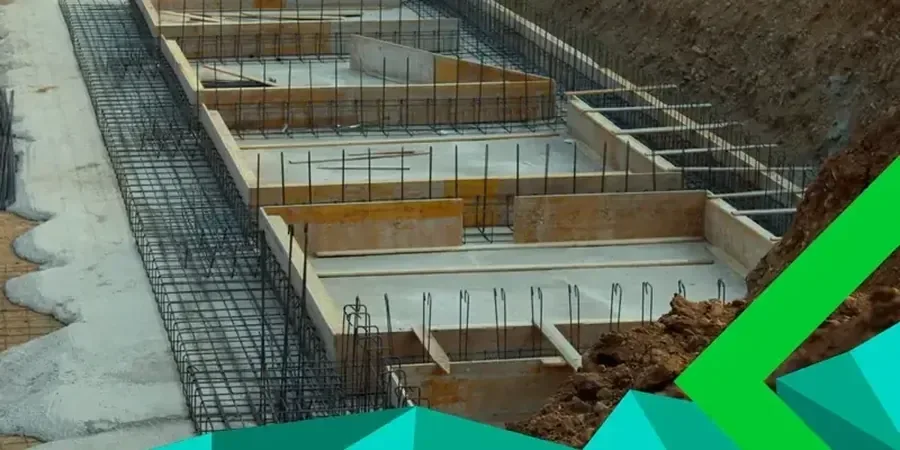
Glacial till in Manchester can yield bearing capacities above 300 kPa, but a single peat lens can halve that value. Site-specific investigation is non-negotiable.
Scope of work in Manchester
Critical ground factors in Manchester
A common mistake contractors make in Manchester is assuming all glacial till behaves the same. The reality is that the till here contains variable sand and gravel lenses, and occasional soft zones from ancient meltwater channels. Designing a shallow foundation without checking for these anomalies can lead to differential settlement of 50 mm or more. Another frequent error is ignoring the effect of tree roots on clay shrinkage and swelling, especially in suburban areas like Didsbury or Chorlton. A proper shallow foundation design must include seasonal moisture change analysis and, where needed, deeper founding depths below the zone of desiccation.
This service complements our laboratory testing work for a complete project analysis.
Our services
We offer two core shallow foundation design activities tailored to Manchester's ground conditions.
Strip and Pad Foundation Design
Detailed bearing capacity and settlement analysis for linear and isolated footings. Includes soil parameter derivation from SPT and triaxial data, partial factor application per Eurocode 7, and reinforcement detailing for masonry or concrete structures.
Raft Foundation Design for Soft Ground
Design of stiffened or cellular rafts to spread loads over low-bearing-capacity soils such as alluvial clays or made ground. Incorporates finite element modelling of differential settlement and structural interaction with the slab.
Quick answers
What is the typical cost for a shallow foundation design in Manchester?
The typical cost range for a shallow foundation design service in Manchester falls between £1,480 and £2,250, depending on site complexity, number of load cases, and whether a structural design report is included. This covers soil parameter review, footing sizing, settlement checks, and compliance with Eurocode 7.
How deep should shallow foundations be in Manchester clay soils?
In shrinkable clay areas, shallow foundations must be placed at a minimum depth of 0.9 metres to avoid seasonal moisture movement. For sites with trees, this depth increases to 1.5 metres or more, depending on tree height and species. A site-specific assessment using the NHBC guidelines is essential.
Can shallow foundations support heavy loads on Manchester's made ground?
Made ground in Manchester varies from well-compacted demolition rubble to loose ash and clinker. Shallow foundations on made ground are only viable if the fill is engineered and tested. For most brownfield sites, a raft foundation or Improvement such as vibro stone columns is recommended instead of isolated footings.
What soil tests are needed before designing shallow foundations in Manchester?
A standard investigation includes trial pits to 3 metres depth, SPTs every 1.5 metres, Atterberg limits, moisture content, and undrained triaxial tests. For sites with suspected peat or soft clay, additional oedometer tests for consolidation parameters are required. The scope follows BS 5930 and Eurocode 7 guidance.